By confirming your subscription, you agree to our Privacy Policy and Toplocentrala's Code of Ethics.
Water Tower Art Fest
25 June 2026
Cube Gallery - Toplocentrala
Visiting hours
Tuesday–Friday: 14:00–20:00 / Saturday–Sunday: 12:00–21:00 / Closed on Monday
Water Tower Art Fest
Forum
WTAF 20: Safety, Moral Alignment, and the Fragility of Freedom
25 June 2026
Cube Gallery — Toplocentrala
Free admission
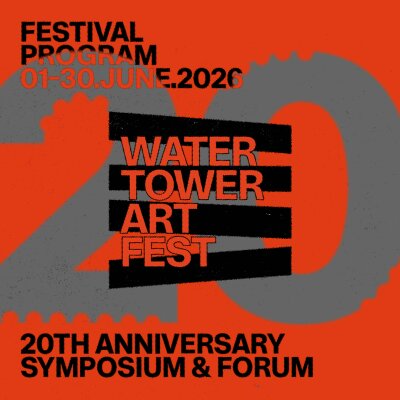
The 20th anniversary of Water Tower Art Fest (WTAF) is conceived as a moment of reflection, continuation, and ethical reconsideration. It marks two decades of sustained artistic practice in spaces that exist outside dominant cultural, economic, and institutional frameworks—places often perceived as outdated, risky, abandoned, or unstable.
What does it mean to be “safe” when the moral environment around us is eroding?
How does an artist maintain integrity while navigating systems that reward compromise?
On 25 June, Cube Gallery — Toplocentrala brings together artists, curators, and cultural practitioners to explore the fragility of artistic freedom. The forum unfolds through three interconnected themes: safety as an ethical foundation, the artist’s moral compass in proximity to structures of power, and the paradox of funding the “unfundable.”
This is not simply an anniversary reflection, but an attempt to formulate new strategies for the survival of meaning, independence, and artistic autonomy.
Programme
15:00–16:00
Panel 1: Safety as an Ethical Foundation
Moderator: Rumena Kalcheva
Participants: Niya Pushkarova, Iva Cukic, Shelagh Wright, Peter Jenkinson (tbc)
In many European contexts, artistic practice is increasingly constrained in the name of safety and efficiency. Bulgaria presents a different paradox: openness enables experimentation in unconventional environments, yet coexists with systemic instability, institutional inconsistency, and a long-term erosion of public trust.
This panel approaches safety not as a matter of regulation or compliance, but as an ethical foundation—the possibility to act, create, and collaborate without altering one’s moral principles in order to fit systems driven by greed, ego, or hidden interests.
17:00–18:00
Panel 2: Funding for the Unfundable
(working language: English)
Moderator: Desislava Pantcheva (BG)
Participants: Katerina Gourgioti (GR), Katerina Kyprioti (GR)
What happens to ideas that do not fit?
Projects that are too early or too experimental. Practices driven by process rather than outcomes. Collaborations built on trust instead of contracts. Work that is too local, too niche, or simply too strange to be translated into the language of cultural policy.
This conversation explores the gap between how cultural value is created and how it is evaluated and funded. Through concrete examples and honest reflection, we will examine how “unfundable” projects come into being: what sustains them, who takes the risks, and which informal economies, alliances, and compromises make them possible.
Rather than rejecting funding systems, the discussion asks:
What do they systematically exclude?
And what alternative forms of support already exist—quietly, informally, and without recognition?
Presented as part of Water Tower Art Fest, the session invites artists, curators, and cultural workers to rethink not only how projects are funded, but also how value itself is defined.
18:00–19:00
Panel 3: Artistic Courage and the Moral Compass
Open discussion with participants from WTAF and the independent art scene in Sofia
Moderators: Rumena Kalcheva and Mariko Hori
WTAF 20 reflects on the ways flexible structures of power surround themselves with artists eager to be recognised, funded, and included. Free artistic expression is often curated in close proximity to influence. Visibility becomes leverage. Participation can become complicity without appearing to do so.
Today, artistic courage may lie not only in provocation, but in maintaining internal coherence. Remaining aligned with one’s moral compass—even when systems subtly encourage deviation—is a form of resistance. It may involve bypassing dominant structures rather than confronting them directly. It may mean building parallel pathways instead of seeking validation from compromised frameworks.
Questions for Discussion
• How can independent initiatives remain relevant in the face of future crises?
• What does “safety in art” mean in a world of weakening democracies and institutional uncertainty?
• What compromises does the independent art scene make in order to secure funding?
• What is the moral cost of remaining independent today?
• When does “uncomfortable” art become the only ethically possible art?
Water Tower Art Fest (WTAF) is a long-running independent platform for contemporary art that has spent more than two decades activating abandoned, transitional, and unconventional urban spaces through artistic interventions, critical discussions, and international collaborations.
Water Tower Art Fest
Forum